There is a very useful article in The Telegraph on herpetiles and developers with particular reference to the situation in various places in Sussex and Kent.
It is on line here.
Saturday, May 12, 2007
Sunday, April 22, 2007
Frog tadpoles wanted in Etchingham
Dave Harris has had a call from a gentleman in Etchingham who has four ponds with numbers of both Smooth and Great Crested Newts, but no frogs, but would like to try.
He is aware of the propensity of newts for eggs and tadpoles of frogs, and will segregate same from them.
So basically, does anyone know of surplus frog tadpoles? He is willing to collect and pay a donation to SARG. Might be interesting, though, to have a look at his ponds and GCNs too.
His name is John Atkins, and telephone number is 01435 883551.
He is aware of the propensity of newts for eggs and tadpoles of frogs, and will segregate same from them.
So basically, does anyone know of surplus frog tadpoles? He is willing to collect and pay a donation to SARG. Might be interesting, though, to have a look at his ponds and GCNs too.
His name is John Atkins, and telephone number is 01435 883551.
Tuesday, April 03, 2007
Midland reptile recording
Leicestershire County Council's Community Heritage Initiative, supported by the Heritage Lottery Fund and Rutland County Council is encouraging the public to become reptile recorders by getting involved with an on-going countywide survey 'Snakes Alive.'
There is an interesting article about this here.
Maybe we could encourage Sussex, East and West, to set up Community Heritage Initiatives for recording reptiles and amphibians. Interesting to see too that Rutland is supporting Leicestershire. Maybe we could get Surrey to help us.
There is an interesting article about this here.
Maybe we could encourage Sussex, East and West, to set up Community Heritage Initiatives for recording reptiles and amphibians. Interesting to see too that Rutland is supporting Leicestershire. Maybe we could get Surrey to help us.
Sunday, March 25, 2007
Useful books and other publications on herpetiles
I have only just started this (March 2007), so be patient while the list grows. If you know of any publication you think worth adding to this list, please e-mail me Patrick Roper on patrick@prassociates.co.uk
Further details of any title can usually be found on the Internet.
Further details of any title can usually be found on the Internet.
- Angel, F. (1946) Faune de France 46. Reptiles et Amphibiens. Librairie de la Faculté des Sciences, Paris. Also available on-line.
- Arnold, E. N. & Burton, J. A. (1978) A field guide to the reptiles and amphibians of Great Britain and Europe. Collins, London.
- Arnold, H. R. (1995) Atlas of the Amphibians and Reptiles in Britain. ITE research publication No. 10, Monks Wood, Cambs. (Available from HMSO, London)
- Barker, Mike & Elliott, Mark (2000) Sussex Amphibian and Reptile Group Millennium Report. Sussex Amphibian and Reptile Group, Hurstpierpoint, West Sussex.
- Beebee, T. (1983) The natterjack toad. Oxford University Press, Oxford.
- Beebee, T. (1985) Frogs & Toads. Whittet Books, Stowmarket, Suffolk
- Beebee, T. & Griffiths, R. (2000) Amphibians and Reptiles. HarperCollins, London.
- Bennett, D. (1999) Expedition Field Techniques. Reptiles and Amphibians. Expedition Advisory Centre, Royal Geographical Society, London
- British Herpetological Society (n.d.c. 1990) Surveying for Amphibians. British Herpetological Society.
- Clegg, John (1965) The Freshwater Life of the British Isles. (Third edition). Frederick Warne & Co. Ltd, London.
- Cooke, A. S. & Scorgie, H. R. A. (1983) The status of the commoner reptiles and amphibians in Britain. Focus on Nature Conservation No. 3. Nature Conservancy Council, Peterborough.
- English Nature (1991) Facts about amphibians. English Nature, Peterborough (A5 leaflet).
- English Nature (2001) Great crested newt mitigation guidelines. English Nature, Peterborough.
- Frazer, J. F. D. (1983) Reptiles and amphibians in Britain. Collins, London.
- Foster, J. (1999) Management of grassland for reptiles and amphibians. In Croft, A. & Jefferson, R. G. (eds) Grassland management of species (Chapter 13.6) in The Lowland Grassland Management Handbook. 2nd edition. RSPB, Sandy, Bedfordshire. Also on line here.
- Gent, T. & Gibson, S. (2003) Herpetofauna Workers' Manual. Joint Nature Conservation Committee, Peterborough.
- Griffiths, Richard (1987) How to Begin the Study of Amphibians. Richmond Publishing Company.
- Hansen, Elvig (trs. Simon, Noel) (1986) Birth of Toads. J. M. Dent & Sons Ltd, London & Melbourne
- Herpetological Conservation Trust (2006) The British Amphibians and Reptiles. Ecology and Conservation. The Herpetological Conservation Trust, Boscombe, Bournemouth (Free A2 leaflet and wall chart).
- Langton, T, Beckett, C. & Foster, J. (2001) Great Crested Newt Conservation Handbook. Froglife, Halesworth, Suffolk.
- Nature Conservancy Council (1983) The ecology and conservation of amphibian and reptile species endangered in Britain. NCC, Peterborough.
- Nixon, Marion (1985) The Illustrated Book of Vertebrates. The mammals, fish, reptiles and amphibia of Britain. Peerage Books, London (originally published by Oxford University Press in 1972).
- Oliver, G. (n.d.) Wildlife Facts. Frogs and Toads. The Wildlife Trusts. (Folded A4 leaflet).
- Olsen,L-H, Sunesen, J. & Pedersen, B. V. (2001) Small Freshwater Creatures. Oxford University Press, Oxford.
- A guide to the Reptiles and Amphibians found in the UK. A useful on-line resource. http://www.herpetofauna.co.uk/default.asp
- Riddell, Anne (1995) Nose to nose with newts. BBC Wildlife Vol.13 No. 6, June 1995: 16-21 .
- Simms, Colin (1970) Lives of British Lizards. Goose & Son, Norwich.
- Thirion, J-M., Grillet, P. & Geniez, P. (2002) Les Amphibiens et les Reptiles du Centre-Ouest de la France, région Poitou-Charentes et départements limitrophes. Collection Parthénope, éditions Biotopes, Meze, France
- Wisniewski, Patrick (1989) Newts of the British Isles. Shire Natural History Series.
- Wycherley, J. & Anstis, R. (xxxx) Amphibians and Reptiles of Surrey. Surrey Wildlife Trust, Woking, Surrey

Sunday, February 18, 2007
Lewes River Festival, 30 June 2007
Message from Dan Ross, Community Ranger from Lewes District Council:
I am organising a River Festival on Lewes Railway Land Local Nature Reserve, on the 30th June 2007, and I am ringing/writing round lots of people I think may like to take part - or suggest someone who would.
The event will be a family community event celebrating the nature reserve and the Ouse river valley. There will be workshops and activities, such as willow weaving, performance including dance by local schools children, music by a local band, and lots of stands for community groups to either run activities or advertise their existence/products/services.
We are trying to invite many wildlife organisations so that their presence can help raise the profile of wildlife protection and the importance of local nature reserves.
I am organising a River Festival on Lewes Railway Land Local Nature Reserve, on the 30th June 2007, and I am ringing/writing round lots of people I think may like to take part - or suggest someone who would.
The event will be a family community event celebrating the nature reserve and the Ouse river valley. There will be workshops and activities, such as willow weaving, performance including dance by local schools children, music by a local band, and lots of stands for community groups to either run activities or advertise their existence/products/services.
We are trying to invite many wildlife organisations so that their presence can help raise the profile of wildlife protection and the importance of local nature reserves.
Further details from Dan Ross, Community Ranger, Lewes District Council
Toad crossings 2007

Sussex toads are on the move again and anyone who is interested in volunteering to help them across the roads should get in touch with Jenny Bacon on 01825 890236 or e-mail: Jenny@baconjjgw.fsnet.co.uk
The toads head back to their traditional breeding pools after dark and need help so that they do not get run over. The picture shows some of the lucky ones being taken over in a bucket.
Saturday, November 18, 2006
National slow-worm compost survey
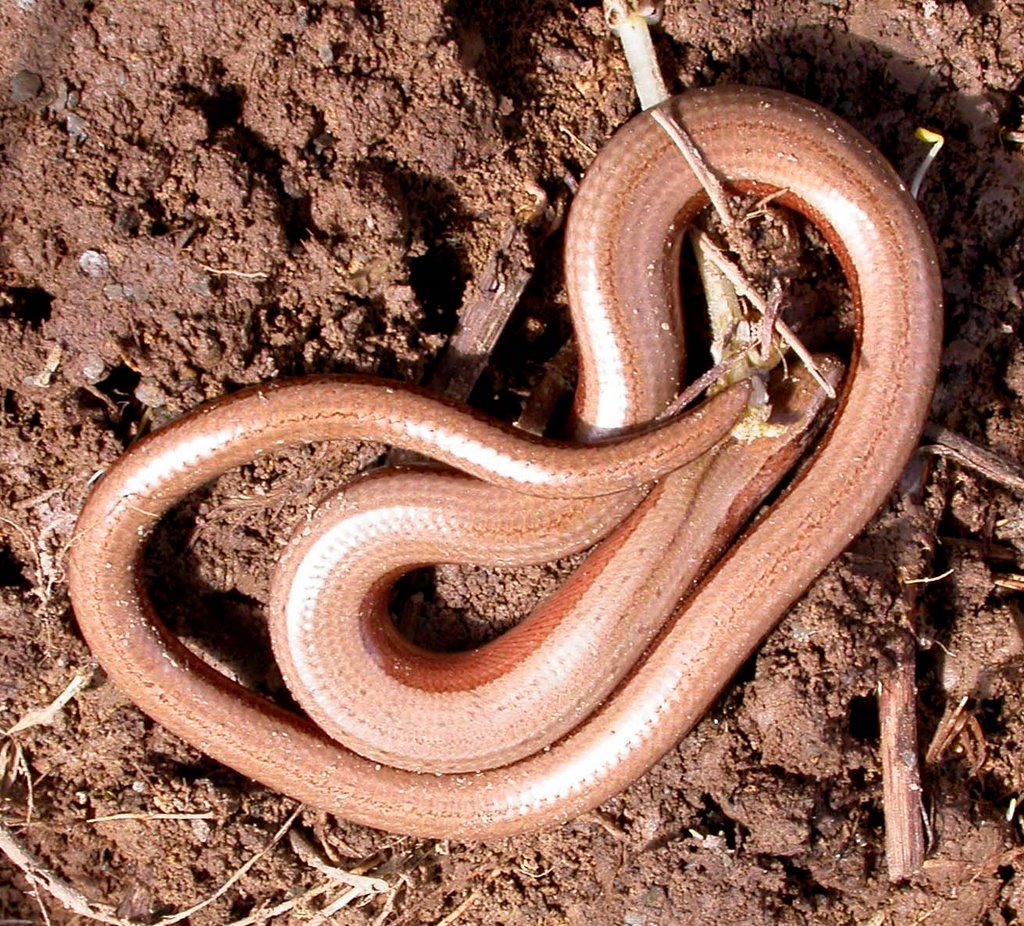
The slow-worm has suffered dramatic declines in recent decades, mainly due to habitat loss and intensive land-use. So the populations remaining in allotments and gardens could be of particular importance to the survival of this species, especially in urban areas, in much the same way as common frogs do very well in garden ponds.
The Herpetological Conservation Trust think that unkempt areas of garden are the most important factor, but compost heaps could provide a key focus for slow-worm activity in the garden or allotment. In order to help us understand more about slow-worms and their use of compost heaps, the National Amphibian and Reptile Recording Scheme (NARRS) is undertaking a national Slow-worm Compost Survey.
For further details and a survey form follow the link here. Your records will be of great importance.
Sunday, November 12, 2006
Regional Conference at Chatham Maritime
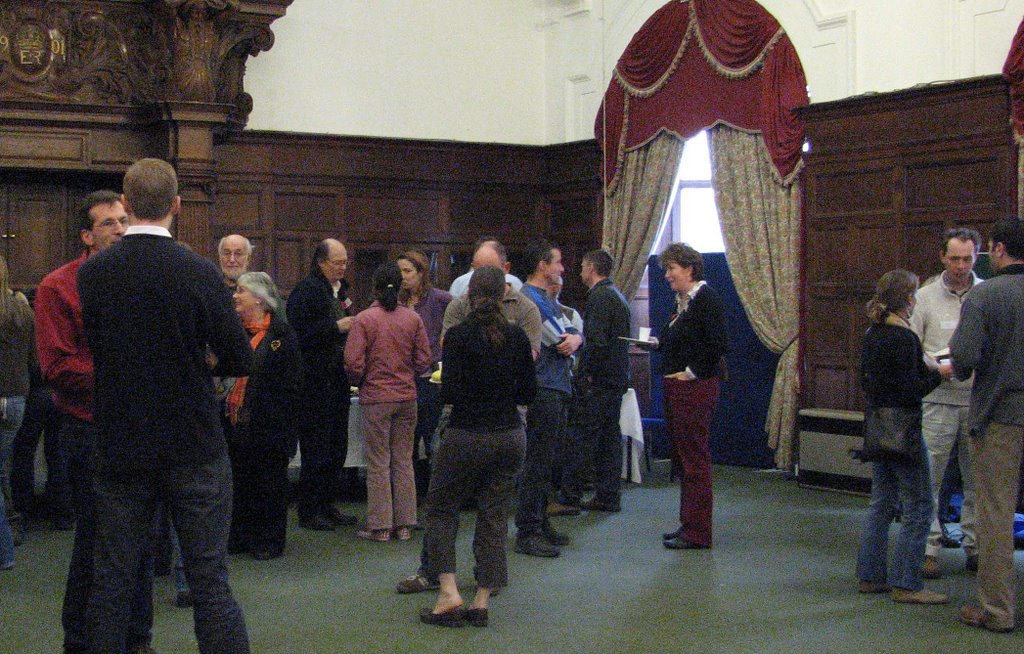
Yesterday saw the very successful regional conference of amphibian and reptile groups from South East England. The event was brilliantly organised by the Kent Amphibian and Reptile Group (KRAG) in the magnificent surroundings of the Wardroom at Chatham Maritime, now part of the University of Greenwich.
Our chair, Jenny Bacon (in front of the window in the picture above) wrote afterwards to Lee Brady, chair of KRAG "many thanks to you and your team for yesterday's conference. The Sussex group really enjoyed the day and I’m sure all of us leaving the conference were buzzing with discussions on planning and what more their group could do to help both amphibians and reptiles including making use of other groups who have similar agendas. As we are hosting the regional conference in 2007 we will of course let you and the other groups know date and venue as soon as possible."
Saturday, November 11, 2006
A slow-worm link
An interesting story here about the translocation of slow-worms prior to the expansion of a schoool in rural Wiltshire. It is refreshing that the school authorities seems so relaxed about the issue.
Friday, November 10, 2006
Gardeners' World newts
The BBC TV programme Gardeners' World presented by Monty Don featured great crested newts today when they ensured that these amphibians were safe during the rebuilding of their pond.
Details can be seen by following this link. Another slice of very positive PR for the cresties!
Details can be seen by following this link. Another slice of very positive PR for the cresties!
Friday, November 03, 2006
Herps and developers

Barry Kemp has drawn attention to an important article on reptiles, amphibians and other protected fauna and the implications this has for developers. It was published in The Sunday Times on 29 October 2006.
To read it, and maybe respond, follow this link.
Wednesday, October 18, 2006
Add an Adder project
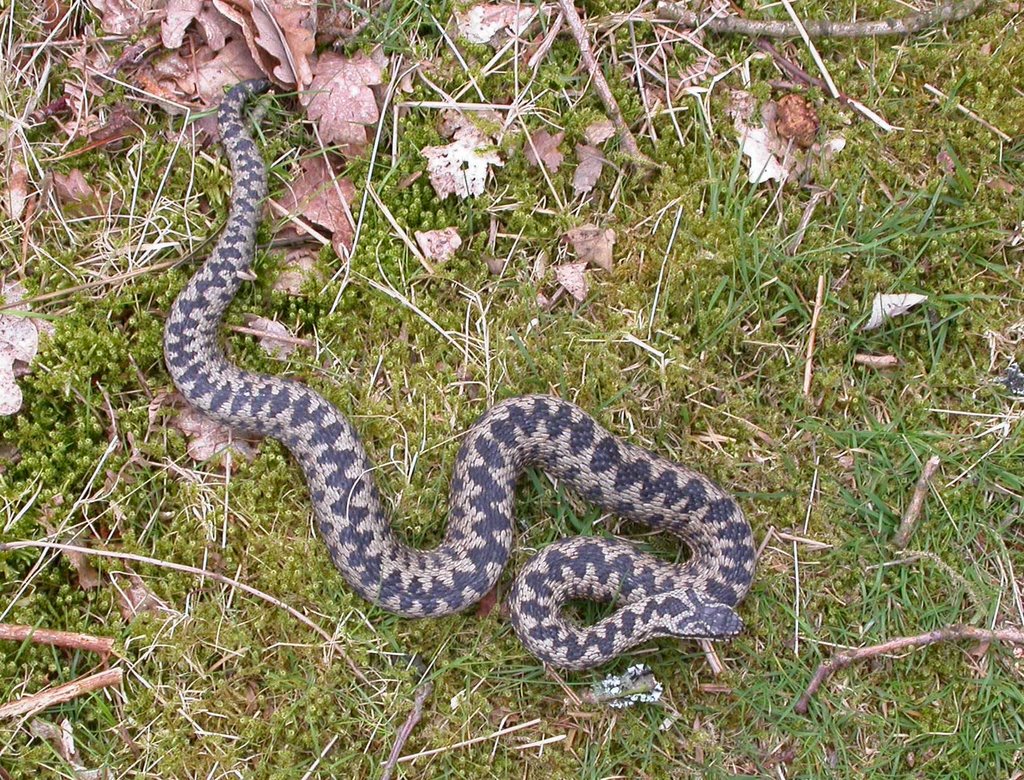
The national Herpetological Conservation Trust is keen to receive any records from Britain of adders, Vipera berus, past or present with the aim of building a picture of how these reptiles have declined or increased in various parts of the country.
For further details see http://www.adder.org.uk/
Friday, October 13, 2006
Frog in toilet query
Peter Hodge, the Sussex beetle recorder has asked the following:
"About 1/2 hour ago (5.30pm) I discovered a young Common Frog perched on the porcelain rim of our downstairs toilet. The only way it could possibly have got there is by swimming up through the sewer.
Is this something that frogs are known to do? If it is then it goes a long way to explaining why frogs sometimes turn up in places where there are no ponds or freshwater."
Does anyone know the answer?
"About 1/2 hour ago (5.30pm) I discovered a young Common Frog perched on the porcelain rim of our downstairs toilet. The only way it could possibly have got there is by swimming up through the sewer.
Is this something that frogs are known to do? If it is then it goes a long way to explaining why frogs sometimes turn up in places where there are no ponds or freshwater."
Does anyone know the answer?
Register for NARRS - the National Recording Scheme
A message from Chris Glee-Owen at the Herpetological Conservation Trust to all people who would like to take part in NARRS (National Amphibian and Reptile Recording Scheme) monitoring programmes next year.
"Please pass this on to other members of SARG, societies, recording groups, friends, family and workmates who you think might want to join in the fun. We have created a register of potential NARRS participants where you can add your name and email address online, to be kept in the loop for NARRS developments. There is no commitment, and the aim is for us to build up a better picture of the numbers of potential surveyors and their geographical distribution."
"Please do take a minute to add your name to the register by going to the NARRS website and clicking on "What is NARRS?", and "Sign up for NARRS". Or you can click this link."
"Please pass this on to other members of SARG, societies, recording groups, friends, family and workmates who you think might want to join in the fun. We have created a register of potential NARRS participants where you can add your name and email address online, to be kept in the loop for NARRS developments. There is no commitment, and the aim is for us to build up a better picture of the numbers of potential surveyors and their geographical distribution."
"Please do take a minute to add your name to the register by going to the NARRS website and clicking on "What is NARRS?", and "Sign up for NARRS". Or you can click this link."
Sunday, September 03, 2006
Creating lizard hibernacula

In the June edition of British Wildlife, there is an interesting short feature on hibernacula for viviparous lizards, Zootoca vivipara, (aka common lizard, Lacerta vivipara) in the Habitat management news section.
This refers to the excellent Conservation Evidence website and two on-line papers available there:
Aldus N., Parmenter J. & Showler D. (2005) Creating hibernacula for common lizards Lacerta vivipara, The Ham, Suffolk, England. ConservationEvidence.com, Case 180.
Creating a reptile hibernaculum, Newbury Bypass, Berkshire, England
Extracted from: Stebbings R. (2000) Reptile hibernacula - providing a winter refuge. Enact, English Nature (England), 8, 2, 4-7
Both are available here: conservation evidence.
Sunday, June 11, 2006
Newt-eating grass snakes

 Our neighbours in Sedlescombe, East Sussex have up to seven grass snakes at a time in their small garden pond.
On one occasion one was photographed consuming a hapless newt (see lower picture) while a companion looked on with an expression of rather snake-like envy. In the last few days the snakes seem to have moved on, but they have left plenty of newts behind for future generations.
Monday, May 22, 2006
Adders galore
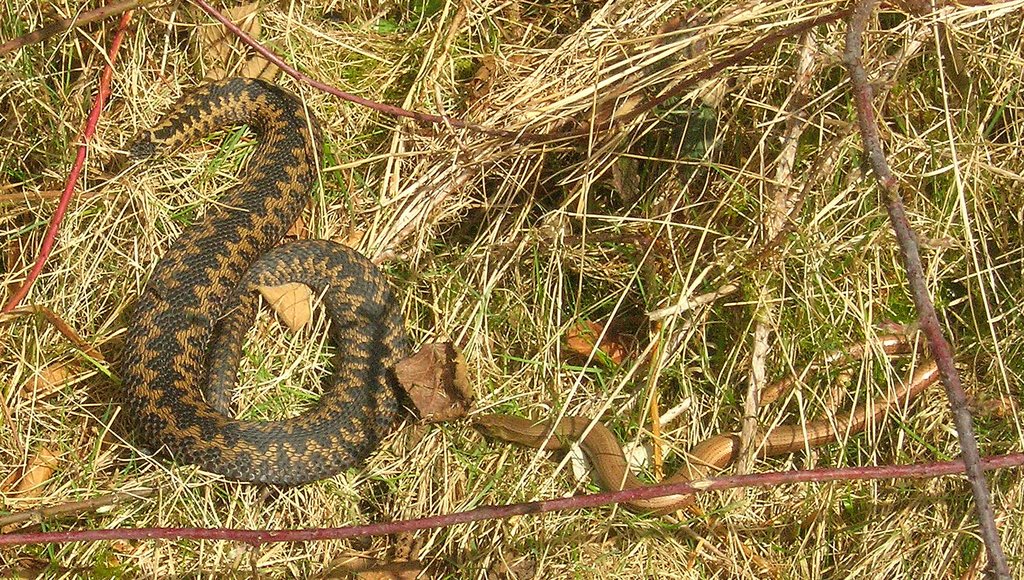

Dave Monk from Sedlescombe near Hastings saw large numbers of adders, as well as slow-worms, in Streetfield Wood in the north of the parish this April.
One of his photos shows an adder and a slow-worm sharing the same sunny patch (apparently without conflict) and the other shows a classic 'nest of vipers' with four adders (I think there are four) enjoying a party. Adders seem to be having a very good year at Sedlescombe and, I think, some other places so any other sightings would be welcome.
Sunday, May 21, 2006
2006 Annual General Meeting at Arlington

Despite the heavy rain a small group of members of the Committee met at the Fisherman's Lodge at Arlington Reservoir on 21 May 2006 and had a useful meeting. Among other things, we agreed to use more electronic means of communication and this weblog is one of the things that has been established as a result.
Another exciting initiative for 2007, our 20th anniversary,is the possibility of a book on Sussex reptiles and amphibians. We will post more on this when we have news.
The annual report and accounts will, of course, be published in for forthcoming newsletter.
Subscribe to:
Posts (Atom)

 Posts
Posts

